
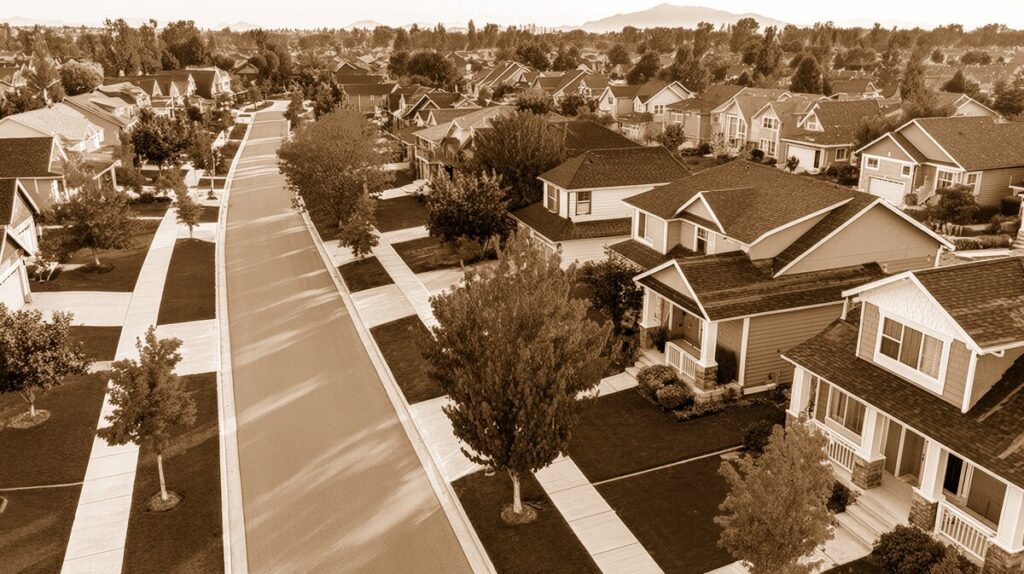
Nestled in the northwest corner of Ann Arbor, the Haisley neighborhood radiates a comforting sense of community, history, and quiet pride. With its tree-lined streets, established homes, and generational stories, Haisley offers a charming window into how Ann Arbor has grown while preserving its heritage.
Origins: From Farmland to Friendly Enclave
Before city blocks and school bells, the land that would become Haisley was largely rural. In the late 1800s and early 1900s, this area consisted of open fields, woodlots, and family farms flanking Miller Avenue and extending north toward what is now North Maple Road.
The real transformation began in the post-war housing boom of the 1950s and 60s. Ann Arbor’s growing population sparked demand for new homes, and the Haisley plots were carved out from former agricultural lands. Builders flocked to the area, laying out quiet residential streets like Walter Drive, Towner Boulevard, and Hudson Avenue, dotting them with tidy ranches, Cape Cods, and split-levels that still define the neighborhood’s architectural flavor today.
How Haisley Got Its Name
The neighborhood’s central and beloved institution, Haisley Elementary School, holds the clue to its moniker. Opened in 1954, the school was named in honor of Earl Haisley, a distinguished Ann Arbor educator, administrator, and advocate for public learning. Earl Haisley served as superintendent of Ann Arbor Public Schools from 1939 to 1952, overseeing expansions that set the stage for Ann Arbor’s modern educational system.
The neighborhoods that developed around the school soon adopted its name, cementing “Haisley” as both a landmark and a community identity.
Historical Milestones
The evolution of Haisley is marked by several turning points:
- 1954 – Haisley Elementary School Opens: More than just a school, it quickly became the community’s gathering place, drawing families to the area and nurturing a strong PTA that remains active today.
- 1950s & 1960s – Housing Development Booms: Streets like Hartford Drive and Barclay Way begin to fill with homes, playgrounds, and families, transforming the landscape from rural to residential.
- 1970s – Diversity Grows: Ann Arbor’s expanding university community brings greater diversity to Haisley, with international students and faculty choosing the neighborhood for its quiet charm and proximity to campus.
- 2000s – Modernization and Stability: While much changes in Ann Arbor, Haisley remains largely stable, retaining its mid-century homes but seeing thoughtful renovations and renewed community interest.
Notable Landmarks and Buildings
Every neighborhood has its anchors — the places that feel like home no matter how times change. In Haisley, a few stand out:
- Haisley Elementary School (825 Duncan Avenue): Its low-slung brick silhouette is familiar to generations of students. The annual ice cream socials, science fairs, and Halloween parades are legendary.
- Miller Nature Area: Just south of Miller Avenue, this little urban woodland offers winding trails, native plants, and a quiet refuge—a testament to the area’s roots as farmland and forest.
- Yorktown Plaza: Not grand, but dear to many locals, this small shopping center at the corner of Miller Avenue and North Maple Road has served as a neighborhood hub, with businesses like A&L Wine Castle and local pizza joints sustaining a sense of community.
- Haisley Woods: Tucked behind homes and along creeks, the neighborhood’s mature trees (some predating the subdivision itself) give each street a leafy, peaceful character.
The Streets That Define Community
Strolling through Haisley is a stroll through time. Some streets have stories etched in every sidewalk crack:
- Towner Boulevard: An east-to-west artery, Towner is a favorite route for dog walkers and runners, linking older blocks to newer ones.
- Winewood Avenue: Known for its diverse architecture and front yard gardens, Winewood hosts a close-knit block that’s famous for its annual summer potluck.
- Walter Drive and Hudson Avenue: These gently curving roads exemplify the classic Haisley streetscape—modest homes, big yards, and neighbors who look out for one another.
Evolving, Yet Timeless
Over the decades, the Haisley neighborhood has changed in subtle ways. The original families—many of whom were drawn to new schools and new homes in the 1950s—have been joined by newcomers from around the country and the world. The influx of young professionals, and families seeking good schools and a sense of belonging, keeps Haisley vibrant and multigenerational.
Even as home renovations bring modern flourishes, the essential spirit endures. Walk down virtually any street in Haisley, and you’ll see:
- Kids biking to school along traffic-calmed roads.
- Neighbors chatting across hedges or organizing block parties.
- Halloween decorations on every porch and cheerful lights in December.
- People tending to gardens, sharing tomatoes, or leaving out extra snow shovels for anyone who needs one.
What Makes Haisley Special
Ask any resident what makes Haisley unique, and the answers cover more than just geography. It’s the feeling of knowing your neighbors. It’s the annual Haisley Howl at the school, where the whole neighborhood turns out in support of local kids. It’s Miller Nature Area’s wildflowers each spring, and the steadfast presence of families who have called these streets home for decades.
Haisley is a neighborhood where heritage is not just remembered, but lived—every day, in every handshake and every friendly hello. It’s not just a place on the map, but a place in the heart of Ann Arbor.